Guide –
Work and Business in Norway
Norwegian hot work certificate - Q&A What is Stiftelsen Sentralregisteret? What is Arbeidstilsynet? Digital checklist for the execution of hot work What is a Hot Work Certificate? Are foreign qualifications for work equipment recognized in Norway? What is DSB? What is FSE? What are ID cards in the Norwegian construction industry (HMS-kort)? What is NAV?
Norwegian hot work certificate - Q&A

What is hot work?
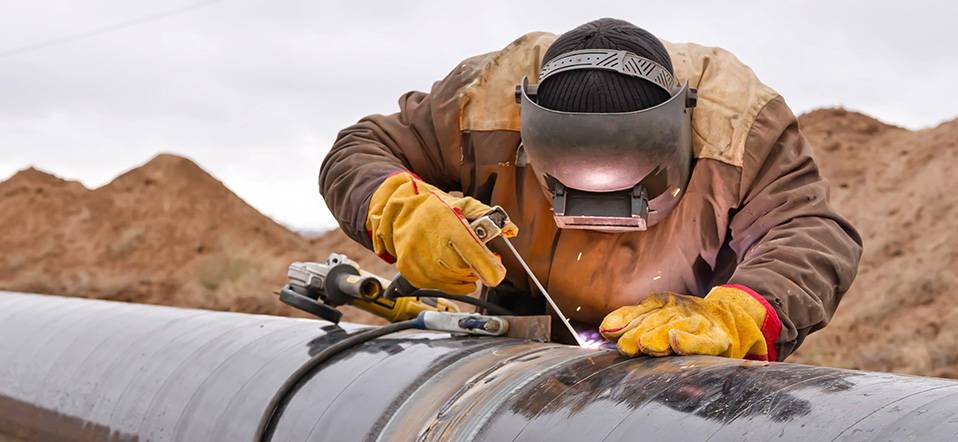
Hot work (Norwegian “varme arbeider”, English “hot work”) refers to fire-hazardous tasks involving the use of machines and equipment that generate open flames, sparks, or hot air, which may cause a fire. Such work includes activities such as gas and electric welding, the use of gas torches, thermal cutting, grinding, and work with heat guns.


Who introduced the requirement for a hot work certificate in Norway?
The requirement to hold a certificate was established by Norwegian insurance companies in safety regulations concerning fire-hazardous work, which form part of insurance agreements. A hot work certificate is obtained by completing a certified training course.


What are safety regulations?
Safety regulations are provisions within insurance terms that impose obligations on the insured to take specific preventive measures to reduce the risk of damage or, in some cases, to possess certain qualifications or certificates.


When is a hot work certificate required in Norway?
Anyone using machines and equipment as defined under hot work, in any location where there is a risk of fire, must hold a valid certificate issued by the Norwegian Fire Protection Association (Brannvernforeningen).


What are the consequences of not having a certificate?
If a connection is established between damage and a breach of safety regulations, the insurance company may refuse to pay compensation in full or in part. Performing hot work in a so-called temporary workplace without the required certificate constitutes a violation of safety regulations. Additionally, employers or clients may refuse to allow work to proceed if a valid certificate cannot be documented.


Is a certificate required in every case of hot work?
No. An exception applies to work carried out in specially adapted areas, known as permanent workplaces (e.g., halls, workshops). These areas must be designated as separate fire zones.


What is the validity period of a hot work certificate?
The certificate is valid for five years.


In what form is the hot work certificate issued?
The certificate is issued in digital form by the Norwegian Fire Protection Association (Brannvernforeningen).
After completing the course, the instructor reports this to the association. Once approved, you will receive an SMS notification that your certificate is available.
You can access your certificate at:
https://online2.superoffice.com/Cust24532/CS/scripts/customer.fcgi?_sf=0%20&action=safeParse&includeId=bvisframefork&key=sbZNK1XruRCcPXJ2&page=certificatepage&custSessionKey=&lang=

To access your certificate, log in using your mobile phone number as the username and your password. On first login, select “Forgot password” and follow the instructions to create a password.
On the certificate page, you can: view your certificate, review safety regulations and the checklist, share your certificate with third parties, and access the handbook “Fire protection during hot work.”


How is the certificate renewed?
Renewal requires completing a new certification course.


My certificate has expired but I intend to renew it soon. Can I continue working?
No. Once the certificate has expired, performing hot work is not permitted until a new course has been completed.


Is fire watch supervision required during hot work?
Yes. A designated fire watch (“brannvakt” / “fire guard”) must be present and continuously assess the fire risk during the work, during breaks, and for at least one hour after completion.


Can the worker also act as the fire watch?
If the fire risk is assessed as low, the worker may also serve as the fire watch.


What qualifications are required for a fire watch?
The fire watch must hold a valid certificate authorizing them to perform hot work.


What are the requirements for firefighting equipment during hot work?
Appropriate firefighting equipment, maintained in accordance with regulations, must be easily accessible. The minimum requirement is two portable extinguishers of at least 6 kg/liters each. One extinguisher may be replaced with a fire hose supplied with water up to the nozzle.


Can two 6 kg extinguishers be replaced with one 12 kg extinguisher?
No, this is not allowed. At least two firefighting devices must always be available in case one fails.


Is a checklist required when performing hot work?
Yes. A checklist for hot work, developed by Finans Norge or an equivalent checklist, must be completed and signed before work begins.


Where can the checklist be found?
A digital version of the checklist is available to all holders of a valid certificate issued by the Norwegian Fire Protection Association (Brannvernforeningen).
Checklist link: https://brannliste.web.app

What is Stiftelsen Sentralregisteret?

Stiftelsen Sentralregisteret (SFS) is a Norwegian organization that collects and provides information about work machines, equipment, and employee competencies. Users with the appropriate permissions can enter, access, and share information about competencies and work machines through the portals reginn.no and kreg.sr.no.


Stiftelsen Sentralregisteret serves all industries in Norway through two nationwide registers: 

Kompetanseregisteret and Maskinregisteret.

Both registers provide industry participants with information that contributes to workplace safety, improved environmental standards, and increased efficiency for both employees and employers.


Kompetanseregisteret is a register of employees’ professional competencies. Sentralregisteret issues 50,000 competence certificates annually for documented and certified safety training. Over 1.3 million certificates have already been registered in their systems. All of our Norwegian professional courses are registered in Kompetanseregisteret.


Maskinregisteret is an electronic register containing information about work machines and equipment. In many ways, it can be compared to the vehicle register maintained by Statens vegvesen.


Link to SFS: 

https://sentralregisteret.no


What is Arbeidstilsynet?

Arbeidstilsynet is the Norwegian Labour Inspection Authority.

It is a government agency responsible for supervising compliance with labor laws and workplace safety regulations in Norway. Its main duties include:

- monitoring working conditions and ensuring health and safety regulations are followed,

- overseeing legal employment and labor law compliance,

- issuing permits and authorizations, e.g., for construction workers or equipment operators,

- conducting information campaigns and training on workplace safety.

In practice, every company and employee in Norway must comply with Arbeidstilsynet requirements, and all reports, permits, or complaints related to workplace safety are handled by this authority.

Link to Arbeidstilsynet: 

https://www.arbeidstilsynet.no/en/

Digital checklist for the execution of hot work

For many years, the Norwegian checklist for the execution of hot work has been available only in paper form. Currently, the Norwegian Fire Protection Association (Brannvernforeningen) has introduced a digital version of the checklist (checklist for the execution of hot work).


The digital checklist makes it easier to document that the safety requirements for hot work have been met before work begins. The solution is user-friendly, efficient, and developed specifically for individuals holding a valid hot work certificate issued by the Norwegian Fire Protection Association (Brannvernforeningen).

With the digital checklist, the user can: complete the form on a mobile phone or computer, sign it digitally, receive a confirmation by email, easily access the documentation after the work is completed.


The Norwegian Fire Protection Association recommends that everyone performing hot work uses the digital checklist. It ensures easier completion, better overview, and significantly safer documentation than the paper version. The digital checklist is an optional alternative. The paper version can still be used if desired.

Link to the digital checklist:

https://brannliste.web.app


What is a Hot Work Certificate?

A Hot Work Certificate is a certificate commonly required throughout Scandinavia for performing fire-hazardous work (hot work), which involves activities with heat processing (thermal work).

The definition of hot work in Scandinavia includes not only welding and the use of open flames, but also cutting, grinding, or even heating with a stream of hot air (used, for example, by roofers or electricians in their work).

A Hot Work Certificate is obtained by completing a course on fire hazards associated with these tasks and the fire safety procedures required when performing hot work. After passing the exam, participants receive a Hot Work Certificate, which is valid for 5 years in Norway.

More about the Hot Work Certificate and course: https://northconsulting.pl/en/training-hot-work


Are foreign qualifications for work equipment recognized in Norway?

Foreign state-issued qualifications are not automatically recognized in Norway. To use foreign qualifications in Norway, you must obtain a permit from the Arbeidstilsynet. Only with this permit can foreign qualifications for work equipment be legally used in Norway.

The permit is granted based on a completed application submitted to the Norwegian Labour Inspection Authority, along with a copy of your passport and a copy of your qualification for the specific work equipment. The application processing time is up to 4 weeks, and the entire procedure is conducted electronically.

Even if the application is approved, foreign qualifications alone are never a basis for obtaining a Norwegian certificate for the equipment. To obtain Norwegian qualifications, you must attend a certified course and pass an exam in Norway.


The procedure for recognizing foreign state-issued qualifications applies to the following categories of work equipment:

- lifting equipment (mobile crane, tower crane, overhead crane, HDS crane)

- forklifts

- telescopic loaders

- heavy construction machinery (bulldozer, excavator, grader, wheel loader, backhoe loader, dumper)


If you are interested in our assistance with recognizing your qualifications in Norway, contact us by phone at +48 609 667 148 or by email at info@northconsulting.pl.

What is DSB?

DSB is a Norwegian government agency – the DSB. Foreign electricians who want to work in their profession in Norway must obtain authorization of their professional qualifications from DSB.


To receive such authorization, an application must be sent by mail or electronically to DSB, which will assess the qualifications and professional experience of the foreign worker. The application must include the following documents, translated into English or Norwegian (certified translation):

- CV detailing education and work experience

- Copy of school diploma, showing the content and duration of vocational training

- Copy of certificate confirming specialist electrician qualifications

- Copy of certificate confirming the right to practice as an electrician

- Copy of reference from previous or current employer, including information on practical experience in the profession

- Copy of passport


When submitting the application, it is necessary to specify whether you are seeking recognition as a specialist electrician or as an electrical installation contractor. If you want to have your electrician qualifications recognized for work on boats and ships, you must apply for authorization through the Sjøfartsdirektoratet.


Link to DSB: https://www.dsb.no/en/


What is FSE?

FSE is the abbreviated name of the Norwegian regulation on safe work and operation of electrical installations (Forskrift om Sikkerhet ved arbeid i og drift av Elektriske anlegg – FSE).

The FSE regulation was developed by DSB and came into effect in Norway in 2006. The FSE regulation requires that anyone working in Norway with or near electrical installations must receive training in electrical safety and first aid. Personnel training under the FSE regulation must be conducted at least once a year (every 12 months). Therefore, from a formal standpoint, every employee working in the electrical industry in Norway must have up-to-date FSE training in order to perform their job.

More about the FSE course: https://northconsulting.pl/pl/szkolenia-zawodowe


If you are interested in the FSE course, contact us by phone at +48 609 667 148 or by email at info@northconsulting.pl.

What are ID cards in the Norwegian construction industry (HMS-kort)?

All workers present on a construction site in Norway are required to carry ID cards (HMS-kort) that confirm the legality of their employment.

This requirement was introduced by the Norwegian Labour Inspection Authority (Arbeidstilsynet) and applies to all construction workers in Norway, including those employed by Norwegian companies as well as employees of foreign companies performing work in Norway. Self-employed individuals running a one-person business are also required to have an ID card.

More information about ID cards can be found on the Norwegian Labour Inspection Authority’s website (in English): https://www.arbeidstilsynet.no/en/hse-cards/hse-cards-in-building-and-construction/

What is NAV?

NAV is the Norwegian Labour and Welfare Administration. NAV provides assistance to job seekers, grants unemployment benefits, pensions, and family and care allowances. It also maintains a database of job vacancies and offers support for people looking for work, such as training programs or internships. NAV is the first place you should turn to when seeking employment in Norway.

Link: https://www.nav.no


Contact us

Send us an inquiry and we will get back to you. You can also contact us at the phone number:
Phone number: +48 609 667 148